
How Storms Work: From Sunbeams to Supercells
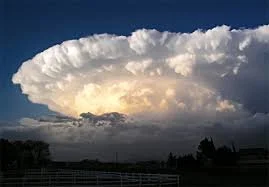
Now that you know the basics of the sky, it’s time to see what happens when the atmosphere gets a little “cranky!” Storms aren’t just loud and flashy; they are the Earth’s way of moving heat around.
Think of a storm like a giant, natural engine. Just like a car needs fuel to move, a storm needs its own special ingredients to get started. When these ingredients mix, they create the amazing (and sometimes scary) weather we see from our windows.
In this section, we are going to look at the “Three Powers” that make a storm:
The Power of Heat: How the Sun starts the engine.
The Power of Water: How clouds grow from tiny puffs into giants.
The Power of Wind: How air moves and spins to create lightning and tornadoes.
Are you ready to see how a storm is born? Let’s look at the first ingredient!
The Three Ingredients of a Storm
For a storm to grow, it needs three specific things to happen at the same time:

Warm, Rising Air (The Fuel)
Think of the Sun as a giant heater. It warms up the ground, and that warm ground heats the air up, sitting right on top of it. Because warm air is lighter than cold air, it starts to float upward, just like a hot air balloon!
Moisture (The Building Blocks)
As that warm air rises, it carries invisible water (called water vapor) with it. As the air gets higher, it cools down, and that invisible water turns into tiny liquid droplets. This is how a small, fluffy cloud turns into a tall, dark thunderhead.

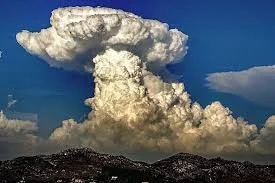
An “Uplift” (The Kickstart)
Sometimes the air needs a little help to start moving upward. This can happen when:
A Cold Front: Cold air acts like a snowplow, pushing the warm air up and out of the way very fast.
Mountains: When wind hits a mountain, it has nowhere to go but up!
The Spark: Lightning and Thunder
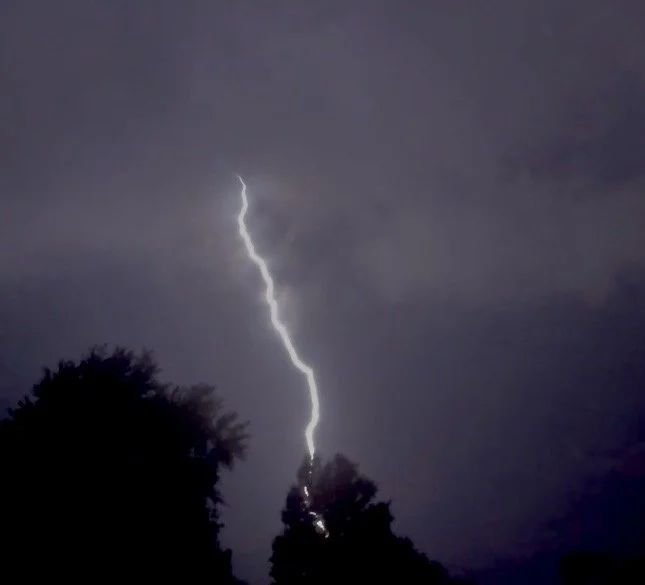
Inside those tall clouds, ice crystals and raindrops are bumping into each other like bumper cars. All that bumping creates static electricity, the same kind of “zap” you get when you rub your socks on a carpet and touch a doorknob.
Lightning: When the cloud gets too full of electricity, it lets out a giant spark to the ground or another cloud.
Thunder: Lightning is incredibly hot, even hotter than the surface of the sun! It heats the air around it so fast that the air “explodes,” creating the loud BOOM you hear.
The Spin: How Tornadoes Form
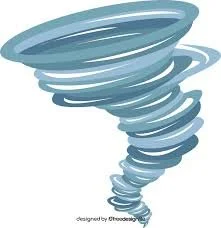
Sometimes, if the wind is blowing at different speeds or in different directions at the bottom and top of a storm, the air starts to roll like a pencil on a table. If a strong updraft (rising air) catches that rolling tube and tilts it upright, it can create a spinning vortex. If that vortex touches the ground, it becomes a tornado.

Junior Spot Challenge
The Fuel Hunt ☀️
Go outside with a grown-up and stand in a sunny spot.
The Test: Does the ground feel warm? Do you see “heat waves” shimmering off the sidewalk or a dark car?
The Goal: If the ground is hot, the “engine” is getting fueled up with rising warm air!
The Building Block Watch ☁️
Go outside with a grown-up and look up at the clouds.
The Test: Are the clouds white and flat, or are they starting to grow tall like giant pieces of popcorn?
The Goal: If you see “Towering Clouds,” it means Moisture is being pushed high into the sky to build a storm.
The Wind Direction Check 💨
Go outside with a grown-up and find a flag, a wind chime, or even some long grass.
The Test: Is the wind blowing gently in one direction, or is it gusty and changing directions?
The Goal: Fast, changing wind is the “Kickstart” that helps a storm start to spin!
The “Thunder-Count” Bonus Task ⚡️
If you hear a BOOM, you can actually tell how far away the storm is!
As soon as you see a flash of lightning, start counting slowly: 1-2-3-4-5…
Stop counting the second you hear the Thunder.
The Result: For every 5 seconds you count, the storm is 1 mile away!
If you count to 5, it’s 1 mile away.
If you count to 10, it’s 2 miles away.
Junior Spotter Safety Tip: If you can hear thunder, you are close enough to be struck by lightning. Once you finish your count, you and your grown-up should head inside to your safe spot!
Ready for Your Next Mission? 🎖️
Way to go! You now know what a storm recipe is! Now it’s time for the most important part: knowing how to stay safe when the sky gets loud.
Ready to gear up? Let’s look at what it takes to be a Safety Hero!